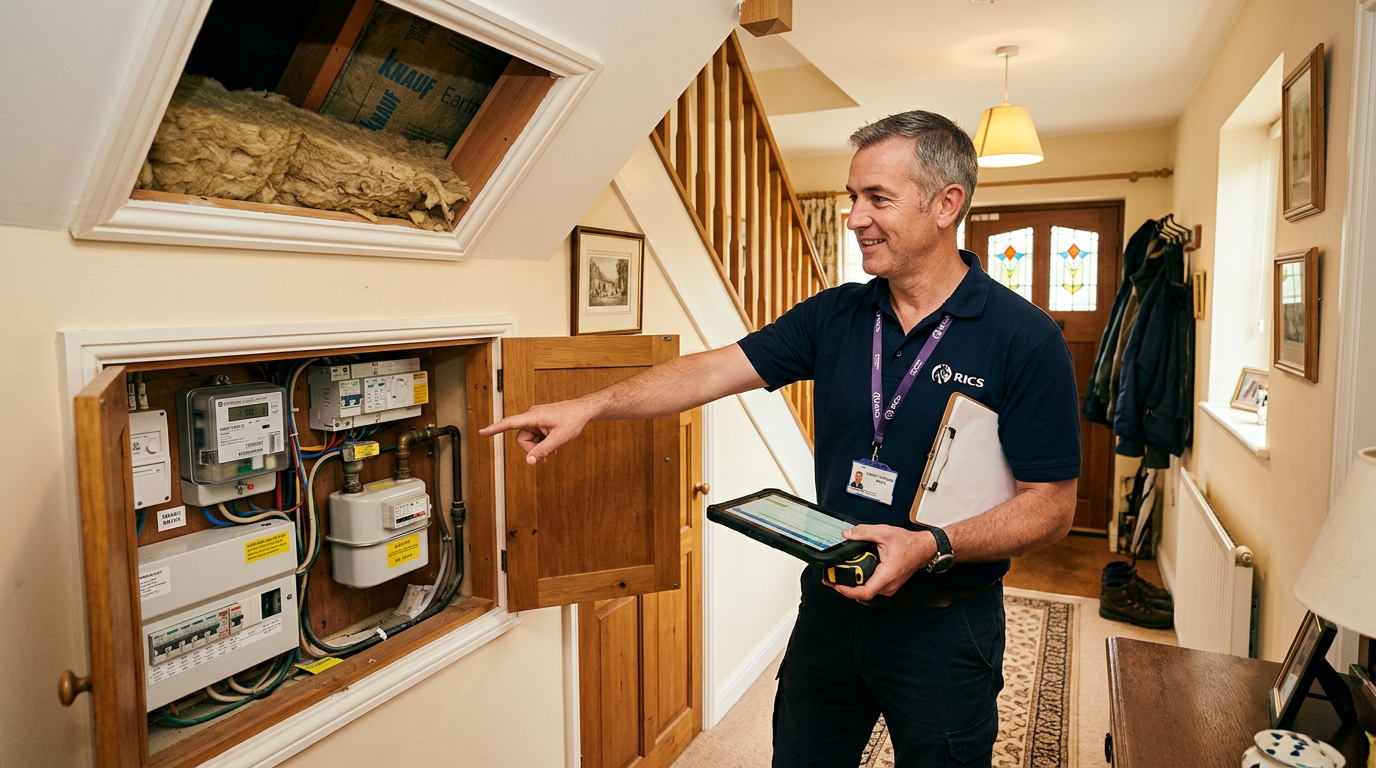
If you're buying, selling or renting a property in Crawley or anywhere in England, you will encounter an Energy Performance Certificate (EPC). Yet for many homeowners and buyers, the EPC remains one of the least-understood documents in the property process. As your Crawley Surveyors, we regularly field questions about what EPCs mean, whether the rating matters and what can be done to improve one. This guide aims to answer all of them.
What Is an EPC?
An Energy Performance Certificate is a standardised assessment of a building's energy efficiency and its estimated carbon dioxide emissions. It uses a scale of A (most efficient) to G (least efficient), similar to the label you'd find on a household appliance. The certificate also provides an estimated annual energy cost and a list of recommended improvements with their potential impact on the rating and running costs.
EPCs in England and Wales are produced by accredited Domestic Energy Assessors (DEAs) and are registered on the Government's national EPC register at epcregister.com. A valid EPC lasts for 10 years, though it becomes invalid if significant energy-related works are carried out — in which case a new assessment should be commissioned.
When Is an EPC Required?
An EPC is a legal requirement in the following situations:
- Selling a property: You must have a valid EPC before marketing. It must be made available to prospective buyers free of charge.
- Renting a property: Landlords must hold a valid EPC and provide a copy to tenants. Since April 2020, all privately rented homes in England and Wales must have a minimum EPC rating of E or above.
- New construction: All newly built homes require an EPC before occupation, assessed using SAP (Standard Assessment Procedure) methodology.
- Certain renovations: If you make significant changes to a property's heating system, insulation or windows, an updated EPC may be required.
An EPC is not required for: listed buildings (where energy efficiency improvements would alter their character), temporary structures, holiday lets used fewer than 4 months per year, or standalone buildings under 50 square metres.
How Is the EPC Rating Calculated?
The rating is based on a points system (0–100+) derived from a Standard Assessment Procedure (SAP) calculation. Key factors that influence the score include:
- Wall construction and insulation: Cavity wall insulation, solid wall insulation (internal or external), and the U-value of the walls
- Roof and loft insulation: Depth and coverage of loft insulation is one of the highest-impact factors
- Heating system: Type of boiler (condensing vs non-condensing), age, controls, and fuel type
- Hot water system: Cylinder insulation, immersion heater vs boiler-fed
- Glazing: Single, double or triple glazing and the age/specification of the units
- Lighting: Proportion of low-energy fittings
- Renewable energy: Solar PV panels, heat pumps, and other low-carbon technologies
The SAP calculation uses standardised occupancy patterns and weather data for England rather than actual energy bills — so the EPC does not necessarily reflect how much energy a particular household uses. A family of five will consume more energy than a single occupant in the same property regardless of the EPC rating.
Does the EPC Rating Affect Property Value?
Increasingly, yes. Research from the Nationwide Building Society and others has found that properties with higher EPC ratings command a measurable premium over equivalent lower-rated properties. As energy costs have risen sharply, buyers are paying more attention to running costs — and mortgage lenders are beginning to offer preferential rates (so-called "green mortgages") on higher-rated properties.
For landlords, the stakes are particularly high. The Government has indicated — though delayed several times — an intention to raise the minimum EPC requirement for new tenancies to C. When (and if) this comes into force, properties below C will not legally be rentable unless exempt, which could significantly affect both capital value and rental yield for lower-rated properties.
What Are the Most Impactful EPC Improvements?
If your property has a low EPC rating, the certificate itself will list recommended improvements in order of cost-effectiveness. The most commonly recommended — and highest-impact — measures for Crawley properties are:
Loft Insulation
Installing or topping up loft insulation to 270 mm is one of the cheapest and most effective measures available. Typical improvement: 3–7 rating points.
Cavity Wall Insulation
For properties built after approximately 1920 with unfilled cavity walls. Typical improvement: 4–8 rating points. Government grants available in many cases.
Boiler Replacement
Replacing an old non-condensing boiler with a modern A-rated condensing unit with full controls. Typical improvement: 5–10 rating points.
Solar PV Panels
A 4kWp solar panel system can raise an EPC from D to C or even B in some cases, depending on other characteristics. Also reduces electricity bills significantly.
Double Glazing
Replacing single-glazed windows with double or triple glazing improves heat retention and typically adds 2–5 rating points, as well as improving comfort.
Heat Pump
Air source or ground source heat pumps can dramatically improve EPC ratings, particularly when replacing oil or electric heating systems. Government BUS grant of up to £7,500 available.
Case Study — Crawley Semi-Detached, EPC D to B
We advised a client selling a 1970s semi-detached home in Pound Hill with an EPC rating of D (59 points). Based on the recommendations in the existing EPC and our independent advice, they invested in: loft insulation top-up (£300, partially grant-funded), cavity wall insulation (£600, ECO4 scheme funded), thermostatic radiator valves (£200), and a smart thermostat (£150). Total outlay: approximately £1,250. The new EPC assessment returned a B rating (85 points). Their estate agent re-marketed the property with the improved rating and achieved a sale price £8,000 above the initial valuation, attributed largely to the improved energy credentials and lower projected running costs.
EPC vs Building Survey — Understanding the Difference
An EPC is not a structural survey. It does not identify damp, subsidence, roof defects, electrical problems or any of the dozens of issues that a building survey covers. An EPC assessor visits the property for approximately 45–90 minutes, recording visible energy-related features — they do not lift floors, open up walls or test services.
As a result, the EPC and a building survey are entirely complementary. A good EPC tells you about running costs and improvement potential. A Level 3 building survey tells you about the structural condition and hidden defects. Both are essential tools for any serious property buyer.
When carrying out building surveys, our team routinely notes energy-related observations — such as uninsulated cavity walls, visible single glazing, or an aged boiler — and can advise on their potential impact on the property's EPC rating and running costs. This gives our clients a more rounded picture of the property's overall condition and efficiency.
Frequently Asked Questions
How much does an EPC cost?
An EPC for a typical residential property in the Crawley area costs between £60 and £120, depending on the assessor and the size and complexity of the property. Some estate agents include an EPC as part of their sales package. For new builds, the developer or builder is responsible for commissioning the EPC.
Can I challenge an EPC rating I think is wrong?
Yes. If you believe the EPC assessor made an error — for example, recorded the wrong wall construction type or failed to note existing insulation — you can request a review or commission a new assessment from a different accredited assessor. The two assessments may produce slightly different results due to the assessor's judgment on certain inputs, which is why energy assessors are trained to look for physical evidence of construction features.
Do listed buildings need an EPC?
Generally no — listed buildings are exempt from the EPC requirement on the basis that the energy efficiency improvements recommended by an EPC could conflict with the listed building consent requirements needed to protect the building's character. However, some local authorities take a different view, and it is advisable to check with your local planning authority if you are unsure about your specific property.
What happens if my rental property is rated F or G?
Since April 2020, landlords in England and Wales cannot let a property with an EPC rating below E to new tenants, and since April 2023 this applies to all existing tenancies too. Breach of this rule can result in fines of up to £30,000. If your property is currently rated F or G, you should seek advice promptly on what improvements are required and whether any exemptions apply to your specific circumstances.
Next Steps
Whether you are buying a property with a low EPC rating, looking to improve your current home's efficiency before selling, or simply want to understand what an EPC report actually means, our team is happy to help. We can advise on the energy-related observations from your building survey, recommend appropriate improvement measures, and put you in touch with trusted contractors for insulation, heating upgrades and renewables.
You may also find our guides on what a building survey covers, buying to renovate, and listed building surveys useful reading alongside this guide.
Contact our team today for expert, jargon-free advice on any aspect of your property purchase or sale in Crawley and across West Sussex and Surrey.