If you're buying a property in Crawley — or anywhere in West Sussex, Surrey or the wider South East — chances are someone has told you to "get a survey." But what exactly is a building survey? What does it cover? And do you actually need one?
As a Crawley Surveyors with over 15 years of local experience, I've answered these questions hundreds of times. This guide covers everything you need to know — in plain English, without the jargon.
What Is a Building Survey?
A building survey is a professional inspection of a property carried out by a qualified surveyor. Its purpose is to assess the property's condition, identify any defects or risks, and give you clear, independent advice about what you're buying before you commit.
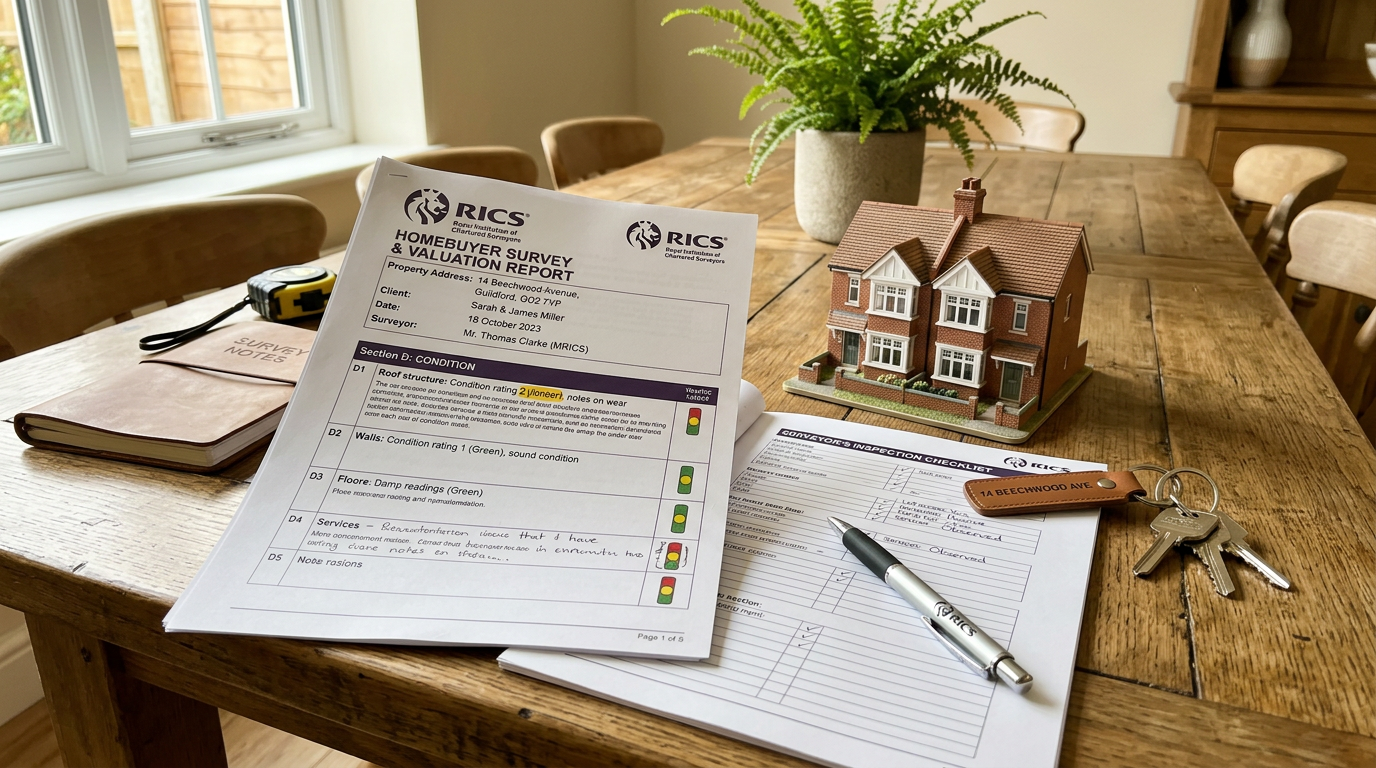
In the UK, building surveys are categorised by RICS (the Royal Institution of Chartered Surveyors) into three levels:
- Level 1 (Condition Report) — A basic overview. Suitable only for very new or recently built properties in excellent condition.
- Level 2 (Homebuyer Report) — A mid-range survey covering the main elements of a property. Suitable for most conventional, well-maintained properties.
- Level 3 (Building Survey) — The most comprehensive option. Covers all aspects of the building in detail. Recommended for older, larger or unusual properties.
When most people ask about a "building survey," they're usually thinking of a Level 3 survey — the full structural survey. This is what we'll focus on here.
What Does a Level 3 Building Survey Cover?
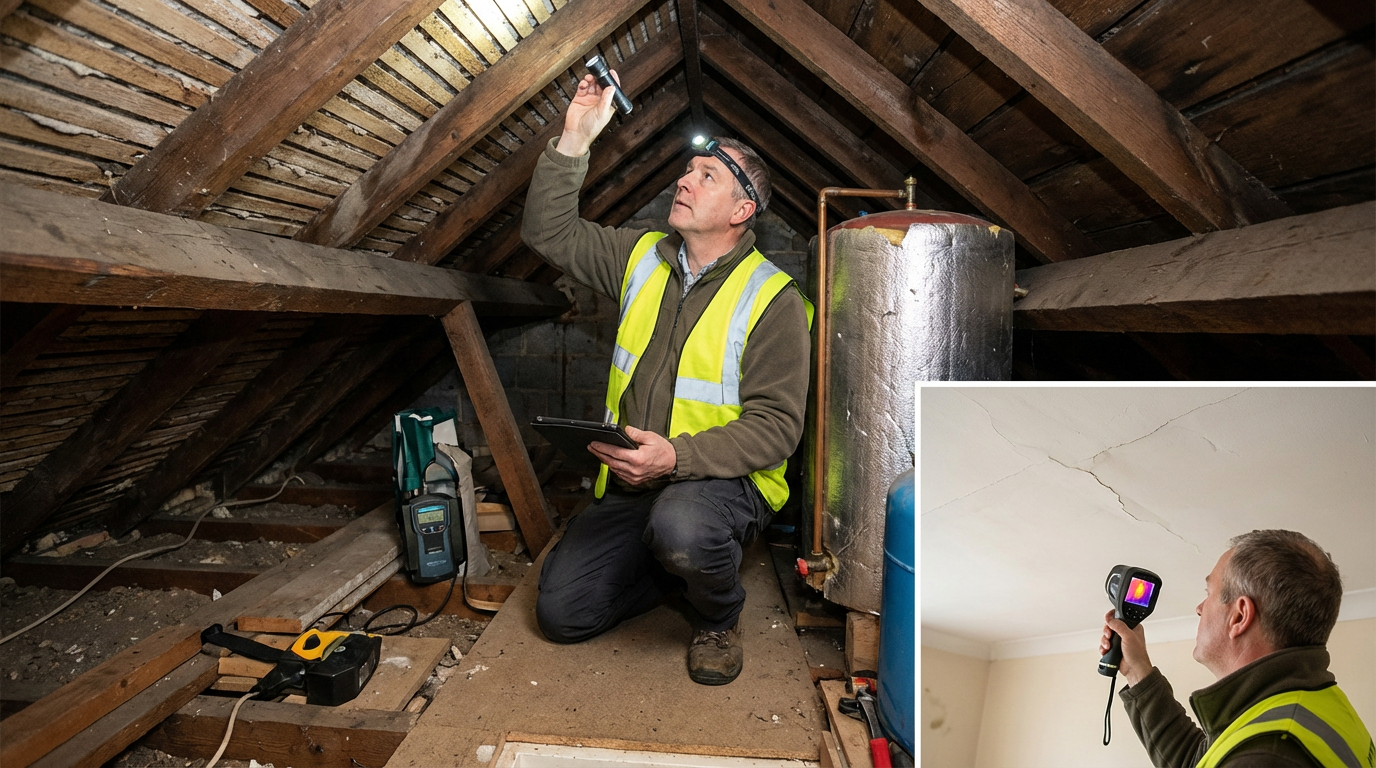
A full building survey is the most detailed inspection available. Your surveyor will inspect all accessible parts of the property, including:
- Roof structure and coverings — including tiles, felt, timbers, valleys and flashings
- Chimneys and flues — condition, pointing and structural stability
- Loft space — roof timbers, insulation, any signs of water ingress or pest infestation
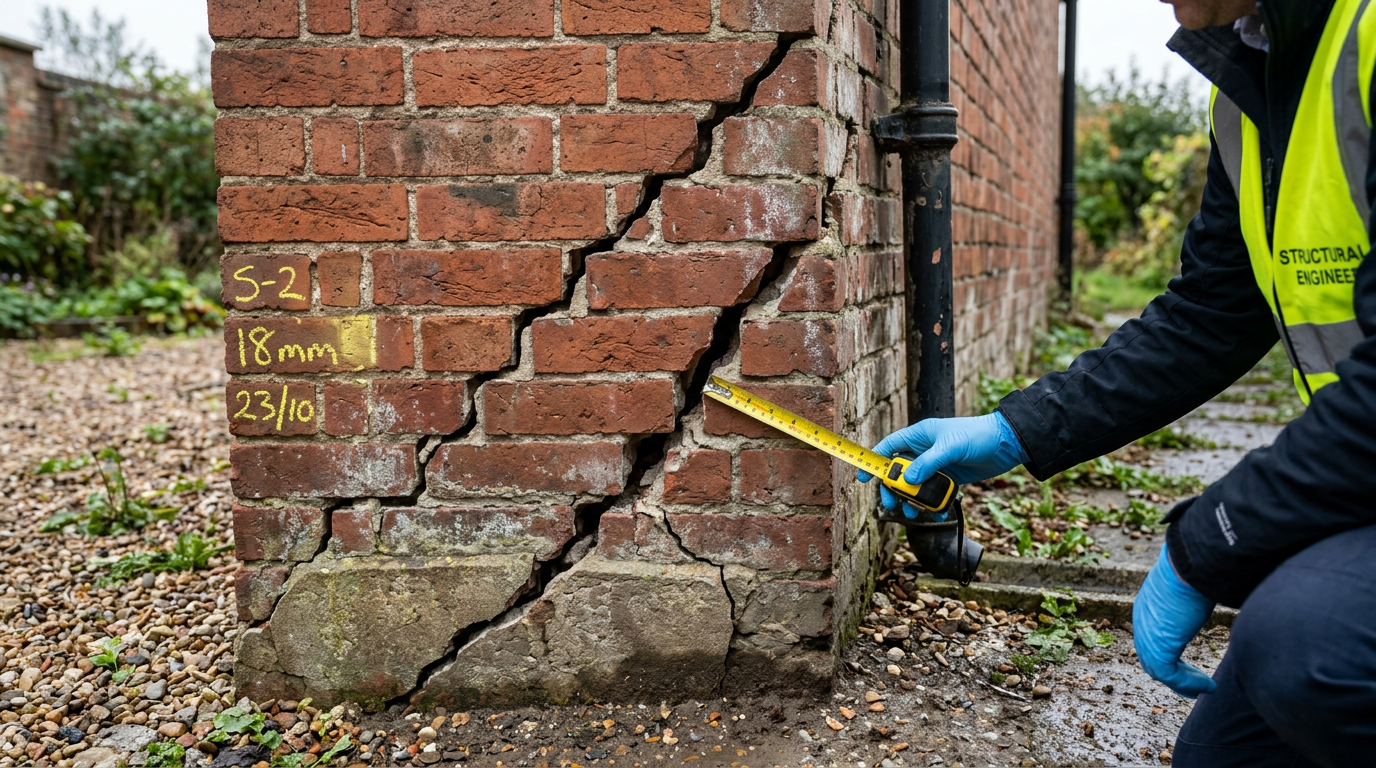
- External walls — brickwork, render, pointing, cracks and movement
- Windows and doors — condition, sealing, operation and any rot or damage
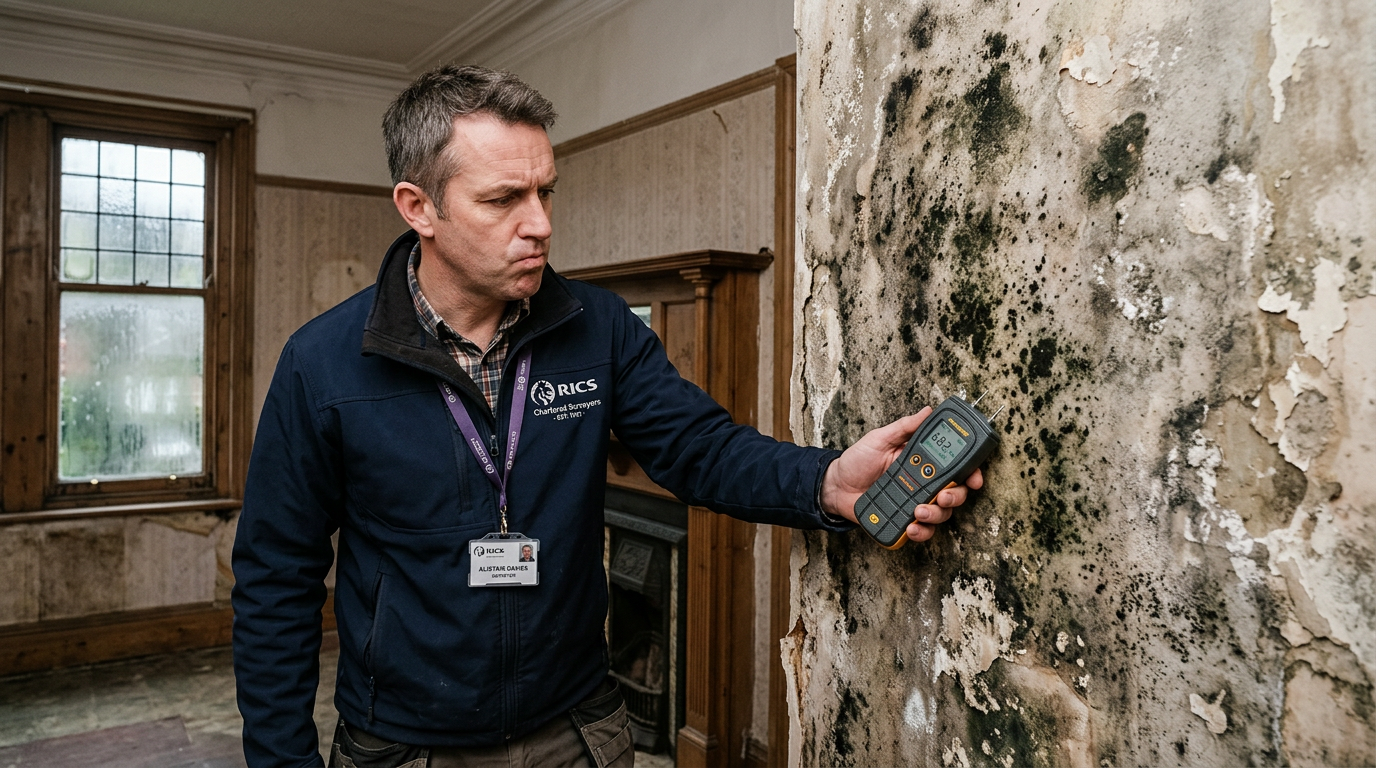
- Internal walls and ceilings — cracks, staining, damp and structural movement
- Floors — timber floors checked for bounce and rot; solid floors for dampness
- Drainage and plumbing — visible pipework and drainage inspection
- Services — notes on the condition of electrical systems, heating and hot water (though full testing requires specialist engineers)
- Outbuildings and garages — condition and any structural concerns
- Gardens and boundaries — retaining walls, fences, trees near the building
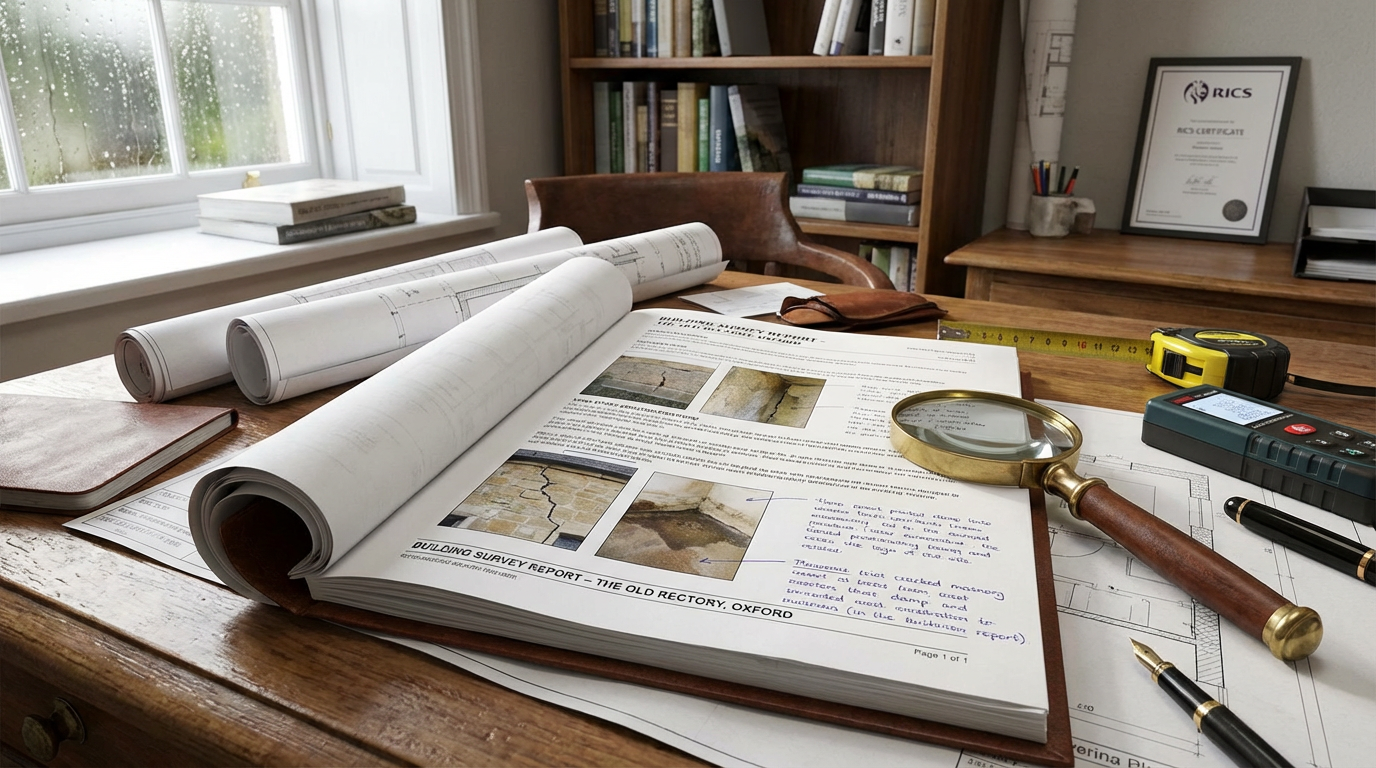
What Are the Condition Ratings in a Survey Report?
One of the most useful features of a modern building survey is the condition rating system. Each element of the property is given one of three ratings:
- Condition 1 (Green) — No repair needed. The element is in satisfactory condition.
- Condition 2 (Amber) — Defects noted. Repair or investigation is needed, but this is not urgent.
- Condition 3 (Red) — Serious or urgent defects. Action is required before or immediately after exchange.
This traffic light system makes it quick and easy to understand where problems lie — and to prioritise which issues need addressing first.
Real example from a recent Crawley survey: We surveyed a 1930s semi-detached in Three Bridges. The estate agent described it as "well-maintained." Our Level 3 survey found two Condition 3 items: rising damp in the rear ground floor wall (estimated £4,500 to treat) and significant movement in the rear chimney stack (estimated £2,800 to repair). The client used these findings to renegotiate £6,500 off the asking price.
Who Should Get a Level 3 Building Survey?
A full building survey is the right choice in several situations:
- Older properties — particularly anything built before 1930. Victorian and Edwardian properties are especially complex, with issues like lime mortar pointing, solid walls and original drainage systems.
- Non-standard construction — timber frame, steel frame, prefabricated, converted barns and other unusual structures.
- Properties you plan to renovate — the more work you're planning, the more important it is to know exactly what you're dealing with.
- Larger properties — the more there is to inspect, the more important a thorough survey becomes.
- Properties with obvious problems — if you've noticed cracks, damp or other issues during your viewing, you need a professional opinion.
In the Crawley area specifically, the large proportion of post-war housing means many properties were built using construction methods that are now known to cause problems — Airey houses, BISF (British Iron and Steel Federation) steel frame homes and Wimpey no-fines construction are all common in Crawley's neighbourhoods and require specialist knowledge to survey effectively.
How Much Does a Building Survey Cost in Crawley?
Survey fees vary depending on the property's size, age and the level of complexity involved. As a general guide for the Crawley area:
- 2-bedroom property: Level 3 from approximately £550–£650
- 3-bedroom property: Level 3 from approximately £650–£750
- 4+ bedroom property: Level 3 from approximately £750–£950+
- Older or non-standard properties: From approximately £800+
These are fixed-fee quotes with no hidden extras. Remember: the cost of a survey is tiny compared to the potential cost of buying a property with undisclosed defects. We've helped clients avoid purchases that would have cost them tens of thousands in unplanned repairs.
How Long Does a Building Survey Take?
The on-site inspection for a typical 3-bedroom house takes between 2.5 and 4 hours, depending on the property's size and condition. Larger, older or more complex properties may take longer.
After the inspection, we compile the written report — typically delivered within 3–5 working days. Reports include:
- A full condition rating for every element inspected
- Detailed written descriptions of all findings
- Photographs of every significant defect
- Estimated cost ranges for remedial work where possible
- Advice on matters to raise with your solicitor
- An executive summary highlighting the most important points
Every client also receives a free follow-up call with their surveyor to discuss the findings and decide on next steps.
Can a Building Survey Help Me Negotiate the Price?
Absolutely — and this is one of the most common outcomes. When a survey identifies significant defects, buyers have strong grounds to renegotiate the purchase price or ask the vendor to carry out remedial work before completion.
In our experience, clients who instruct a Level 3 building survey achieve an average price reduction of £5,000–£15,000 in cases where significant defects are found. Even when the survey is broadly positive, the peace of mind is invaluable.
Common Defects Found in Crawley Properties
Based on hundreds of surveys we've completed in the Crawley area, here are the most frequently encountered defects:
- Damp — both rising damp (particularly in older properties) and penetrating damp around windows, roofs and walls
- Roof defects — slipped or missing tiles, failed flashings around chimneys and dormers, inadequate ventilation
- Timber decay — particularly in floor joists and roof timbers in older properties
- Cracked render — common on 1920s–1960s properties
- Subsidence — particularly in areas with clay soils (common across much of West Sussex)
- Poor DIY repairs and alterations — a perennial feature of properties sold in the Crawley market
- Non-standard construction issues — specific defects in post-war system-built homes
Frequently Asked Questions About Building Surveys
Book a Building Survey in Crawley Today
If you're buying a property in Crawley, Horsham, Horley, Redhill or anywhere across West Sussex or Surrey, our accredited surveyors are ready to help. We provide fixed-fee, no-obligation quotes and respond within 2 hours during working hours.