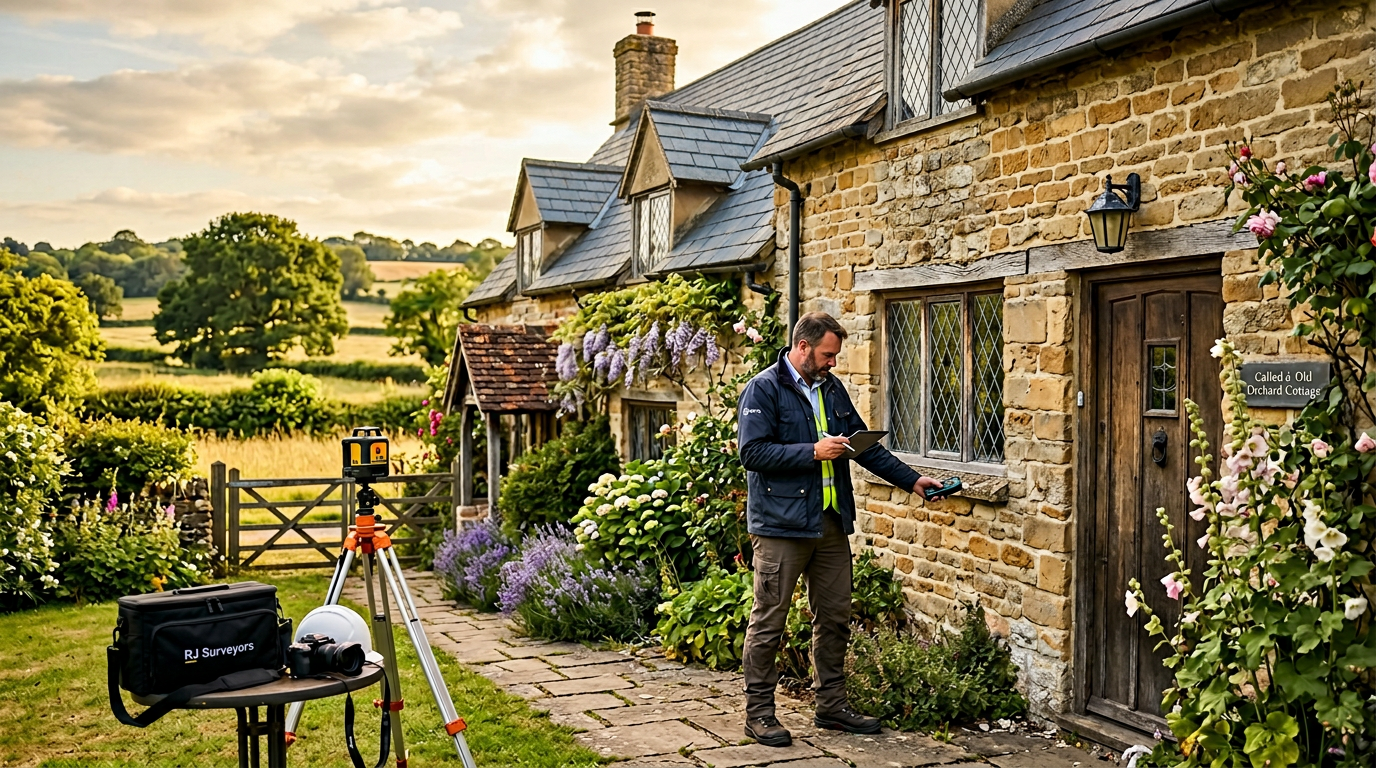
West Sussex and the broader South East of England are home to thousands of listed buildings — from Georgian townhouses and Victorian farmhouses to medieval barns and 17th-century cottages. Buying one of these properties is a rewarding experience, but it carries responsibilities and risks that don't apply to standard modern homes. A specialist listed building survey from an experienced Crawley Surveyors is not just advisable — in many cases it is essential to avoid costly mistakes and legal complications.
In this guide, I'll explain what a listed building is, why standard surveys are insufficient, what a specialist survey covers, and what restrictions apply to alterations and repairs once you own the property.
What Is a Listed Building?
A listed building is a structure placed on the Statutory List of Buildings of Special Architectural or Historic Interest, maintained by Historic England. Listing recognises that a building has special architectural or historic merit worth preserving for future generations. In England, there are three grades:
- Grade I: Buildings of exceptional interest. Only approximately 2% of all listed buildings fall into this category.
- Grade II* (Two Star): Particularly important buildings of more than special interest. Around 6% of all listed buildings.
- Grade II: Nationally important buildings of special interest. The vast majority — around 92% — are Grade II listed.
Listing applies to the entire building, including its interior, and often extends to structures within the curtilage (the land immediately surrounding it) such as outbuildings, walls, and gates. This matters enormously when you're planning any alterations or maintenance work.
Why Standard Surveys Aren't Enough
A standard RICS Level 2 Homebuyer Report is designed for conventional, modern properties in reasonable condition. It uses a simple traffic-light rating system and is not equipped to deal with the complexity of historic building construction. A standard Level 3 Building Survey is better — but even this requires specialist knowledge to interpret correctly when applied to period properties.
Listed buildings were constructed using traditional materials and methods — lime mortar, solid wall construction, timber frames, natural stone, handmade bricks — that behave very differently from modern materials. A surveyor without specialist knowledge may misidentify normal seasonal movement as structural failure, or conversely, fail to recognise genuinely problematic decay that is hidden beneath layers of later pointing or render.
The consequences of an inadequate survey on a listed building can be severe:
- Purchasing a property with undisclosed defects that cost far more to repair using appropriate traditional methods than equivalent modern repairs
- Unknowingly inheriting liability for unauthorised alterations carried out by previous owners — which can require you to reinstate original features at your expense
- Undertaking repairs using inappropriate modern materials (such as cement mortar or UPVC windows) that cause long-term structural damage and may result in enforcement action
- Underestimating the ongoing maintenance costs of a property that must be repaired using specialist contractors and traditional materials
What a Listed Building Survey Covers
A specialist listed building survey goes well beyond a standard inspection. In addition to the usual structural and services assessment, it should cover:
Historic Construction Assessment
Understanding how the building was originally constructed — the wall composition, roof structure, floor construction, and original drainage — is fundamental to identifying defects and advising on appropriate repairs. In West Sussex, you'll encounter everything from Wealden half-timber framing to Horsham stone slate roofs and flint-faced walls.
Unauthorised Alterations Audit
We check for evidence of alterations that may have required Listed Building Consent (LBC) but were carried out without it. Common examples include replacement windows and doors, internal partition removal, installation of modern insulation behind historic wall finishes, and the use of cement render over original lime plaster. Any unlawful alteration is a material liability that transfers to the new owner on purchase.
Damp and Moisture Assessment
Historic buildings are designed to breathe — moisture enters through walls and evaporates naturally. Modern "improvements" such as cement pointing, impermeable external renders, and internal plasterboard dry-lining trap moisture within the wall structure, causing accelerated decay to timber frames and masonry. Identifying moisture problems in a listed building requires an understanding of this breathing mechanism that standard damp surveys often lack.
Structural Analysis
Historic buildings move. Timber frames flex and settle over centuries. Masonry walls develop irregular cracks as ground conditions vary. A skilled surveyor will distinguish between historic, stabilised movement — which is cosmetically unsightly but structurally benign — and active, progressive movement that requires intervention. Getting this wrong in either direction has significant consequences.
Services and Modernisation Assessment
Older listed buildings often have outdated electrical wiring (aluminium wiring or rubber-insulated cables), cast iron or lead pipework, and heating systems that are difficult to upgrade without LBC. The survey should assess the current state of services and advise on what upgrades are possible within the constraints of listing.
Real Case Study — Grade II Farmhouse, Rural West Sussex
We surveyed a Grade II listed 17th-century farmhouse near Horsham in late 2025. The property had been marketed with a recent electrical certificate and "fully rewired." Our survey identified that the rewiring had been carried out by removing and not reinstating original oak beam-and-plaster ceilings in three ground-floor rooms to route new cables — an alteration requiring LBC that had not been applied for. We also found that a section of the original inglenook fireplace had been partially blocked and altered without consent. The solicitor was advised before exchange. The vendor agreed to apply retrospectively for LBC and reduced the price by £22,500 to cover the reinstatement costs. Our client paid £750 for the survey and saved substantially more.
Listed Building Consent — What Requires It?
Listed Building Consent is required for any works that would affect the character of a listed building as a building of special architectural or historic interest. This applies to both external and internal works, and the threshold is lower than most people realise. You do not need LBC for genuine like-for-like repairs using appropriate materials — but almost anything that changes the fabric, appearance, or internal layout of the building requires it.
Common works requiring LBC include:
- Replacing windows or doors (even if like-for-like in appearance, materials matter)
- Adding or removing internal walls and partitions
- Changing roof coverings, even to apparently identical materials
- Installing secondary glazing, solar panels, or heat pumps
- Applying external render or cladding
- Installing insulation within walls or roof voids
- Any significant alteration to the historic fabric of the interior
Carrying out works to a listed building without consent is a criminal offence under the Planning (Listed Buildings and Conservation Areas) Act 1990. There is no limitation period — an unauthorised alteration carried out 50 years ago can still be the subject of enforcement action today. This is why the unauthorised alteration audit in a specialist survey is so important.
Understanding the Ongoing Costs
Owning a listed building involves higher maintenance costs than a comparable modern property. Repairs must generally be carried out using traditional materials — lime mortar rather than cement, natural slate rather than concrete tile, timber rather than UPVC. These materials and the specialist contractors who work with them are more expensive. You also cannot carry out repairs yourself that would normally qualify as permitted development on a non-listed building without seeking consent.
However, there are some financial benefits. Historic England and local authorities occasionally offer grants for significant repairs to listed buildings, particularly Grade I and II* properties. Some repairs may be exempt from VAT (currently at 0% for approved alterations to listed buildings). Heritage building insurance products specifically designed for listed properties tend to offer better coverage than standard home insurance for the kinds of repairs these buildings require.
Frequently Asked Questions
Can I get a mortgage on a listed building?
Yes — most mainstream lenders will lend on Grade II listed buildings, though some have restrictions. Specialist lenders are available for more complex properties. The survey report will be important to the lender, as unusual defects or outstanding LBC issues can affect their willingness to lend. We can prepare survey reports in a format suitable for mortgage purposes.
How much does a listed building survey cost?
A specialist listed building survey is more detailed and time-consuming than a standard survey. Our fees typically start at £900–£1,200 for a modest Grade II listed property and increase with size and complexity. We will provide a fixed fee quote after receiving the property details. The cost should always be considered against the risks of buying a listed building without specialist advice.
What if I discover unlawful alterations after purchase?
As the new owner, you inherit liability for any unlawful alterations, regardless of when they were carried out or by whom. The local planning authority can serve an enforcement notice requiring you to reinstate original features. In serious cases, prosecution is possible. If unlawful alterations are identified before exchange, you can negotiate a price reduction, require the vendor to regularise the position, or withdraw from the purchase. This is why pre-purchase identification is so important.
Does listing affect the value of a property?
It depends on the property and the market. In strong markets for period properties, listing can be a positive — it signals character and authenticity that attracts a premium. However, the constraints on alterations and the higher maintenance costs can depress values in some local markets. Our valuers can advise on the specific impact for your property and location.
How We Can Help
At Crawley Surveyors, our team has extensive experience surveying listed and historic properties across West Sussex, Surrey and the South East — from listed cottages in villages near Horsham and East Grinstead to Georgian townhouses and rural farmsteads. We provide:
- Specialist RICS Level 3 building surveys tailored to listed and historic properties
- Unauthorised alteration audits and LBC compliance checks
- Advice on appropriate repair specifications and materials
- Structural assessments for historic movement and timber decay
- Liaison with conservation officers at West Sussex County Council and Crawley Borough Council
- Pre-purchase valuations for mortgage and negotiation purposes
If you're considering purchasing a listed building — or if you already own one and are planning repairs or alterations — contact our team for expert advice. You may also find our main building survey guide and our article on damp in older properties helpful reading.