It's the question I get asked more than any other. You're buying a property in Crawley — or perhaps in Horsham, Horley or Reigate — and your mortgage broker or solicitor has mentioned you should "get a survey." But which one?
A homebuyer report and a full building survey are both professional property inspections, but they serve different purposes and suit different property types. Choosing the wrong one could leave you with expensive surprises after completion — or paying for more survey than you actually need.
As someone who conducts both types across West Sussex every week, here's my honest breakdown.
The Quick Answer
For most buyers, the choice comes down to this: if your property was built after 1930, is in reasonable condition and you're not planning major work, a Level 2 Homebuyer Report is usually sufficient. If the property is older, unusual or you have any specific concerns, go for a Level 3 Building Survey.
Still not sure? Read on.
What Is a Homebuyer Report (Level 2)?
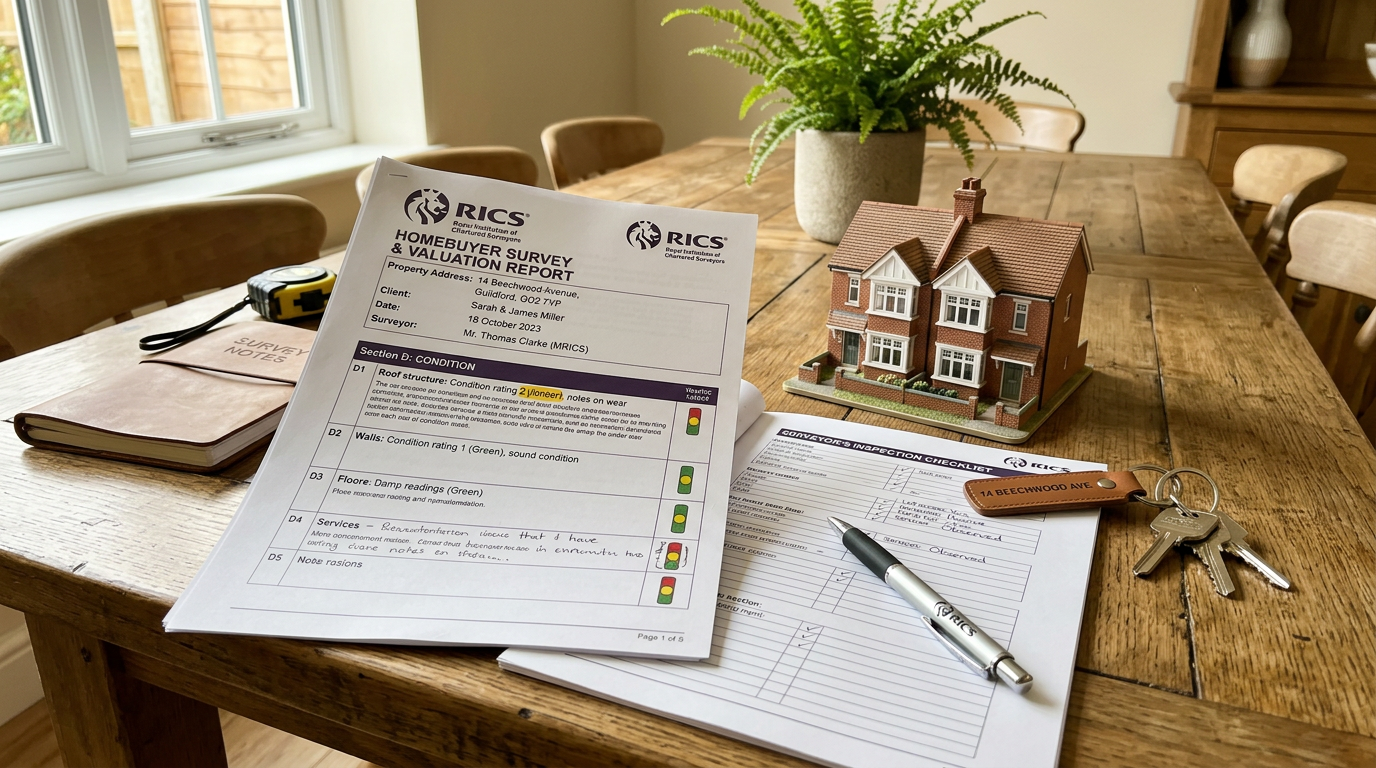
A RICS Level 2 Home Survey — commonly called a homebuyer report — is a standard inspection of a property's main elements. It's a thorough, readable report that tells you about the property's condition using a clear condition-rating system (1, 2 or 3).
What it covers:
- All the main elements of the property visible during inspection
- Any significant defects that could affect the property's value
- Risks from damp, drainage problems or persistent movement
- Legal issues to raise with your solicitor
- A market valuation (optional add-on)
What it doesn't cover:
- Areas that are concealed or inaccessible
- A detailed investigation of structural issues (flagged but not fully investigated)
- Testing of services beyond visual inspection
- The depth of commentary found in a full building survey
Case study: A client purchasing a 1960s detached in Horley instructed a Level 2 survey. We found condensation damp in the bathroom and a failed roof valley joint — both Condition 2 items. The client used these findings to request the vendor carry out the roof repair before exchange. Total cost to vendor: approximately £850. A straightforward, satisfying outcome.
What Is a Building Survey (Level 3)?
A Level 3 Building Survey — or full structural survey — is the most comprehensive inspection available. It goes deeper into every aspect of the property's fabric and structure, with more detailed commentary and a wider scope of inspection.
It covers everything in a Level 2, plus:
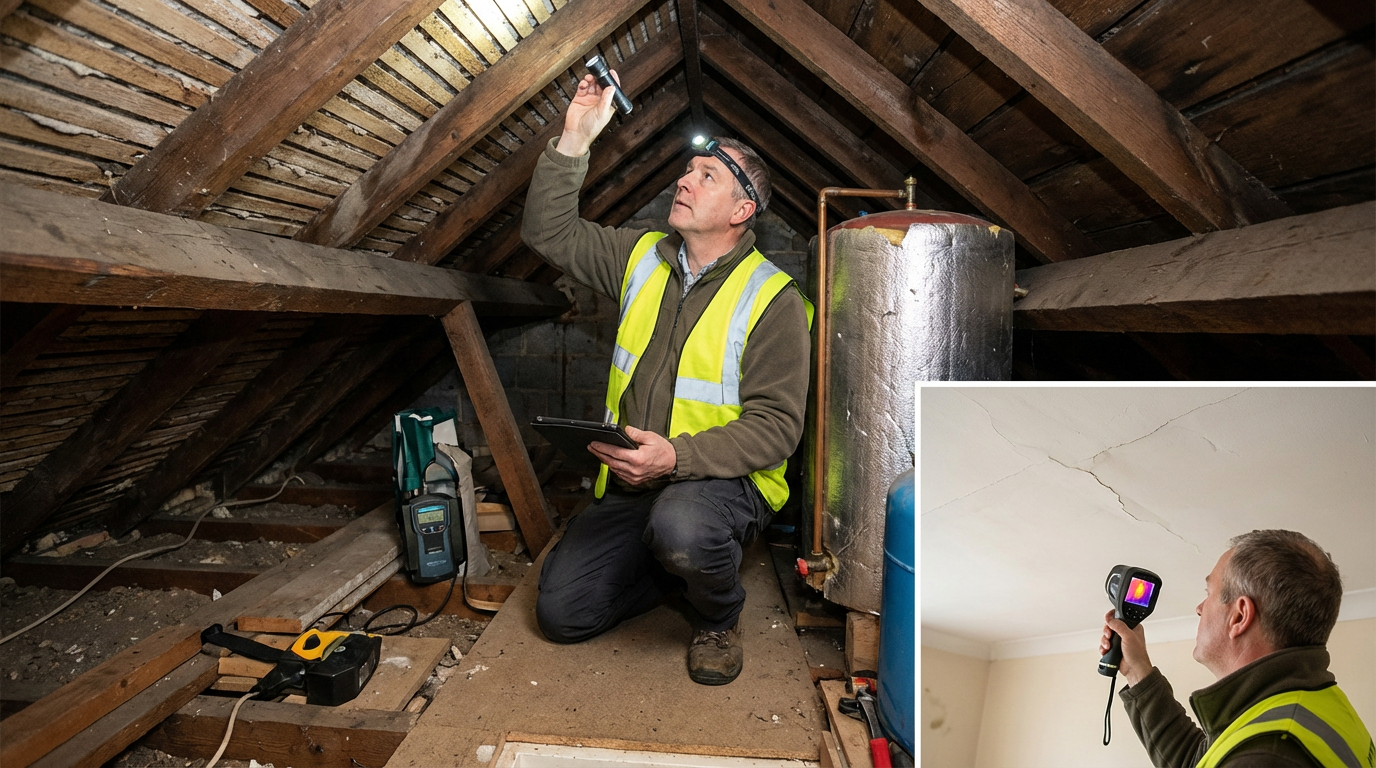
- More detailed inspection of all accessible areas, including loft spaces and sub-floor voids
- A more detailed investigation of any defects found
- Estimated costs for remedial work where possible
- Greater detail on construction methods, materials and age-related issues
- Specific guidance tailored to the property's type and construction
| Feature | Level 2 (Homebuyer) | Level 3 (Building Survey) |
|---|---|---|
| Coverage | Main elements, visible areas | All accessible areas, full structure |
| Loft inspection | Brief if accessible | Full inspection |
| Defect detail | Flagged and rated | Full investigation and description |
| Repair cost estimates | Not included | Included where possible |
| Best for | Post-1930 conventional properties | Older, larger or unusual properties |
| Typical cost (Crawley area) | From ~£350–£450 | From ~£550–£750 |
| Report length | 20–40 pages | 40–80+ pages |
When Should You Choose a Level 3 Survey?
Choose a full building survey if any of the following apply:
- The property was built before 1930
- It's a Victorian or Edwardian terraced or semi-detached house
- The construction is non-standard (timber frame, steel frame, prefab, converted barn)
- You plan to carry out significant renovation work
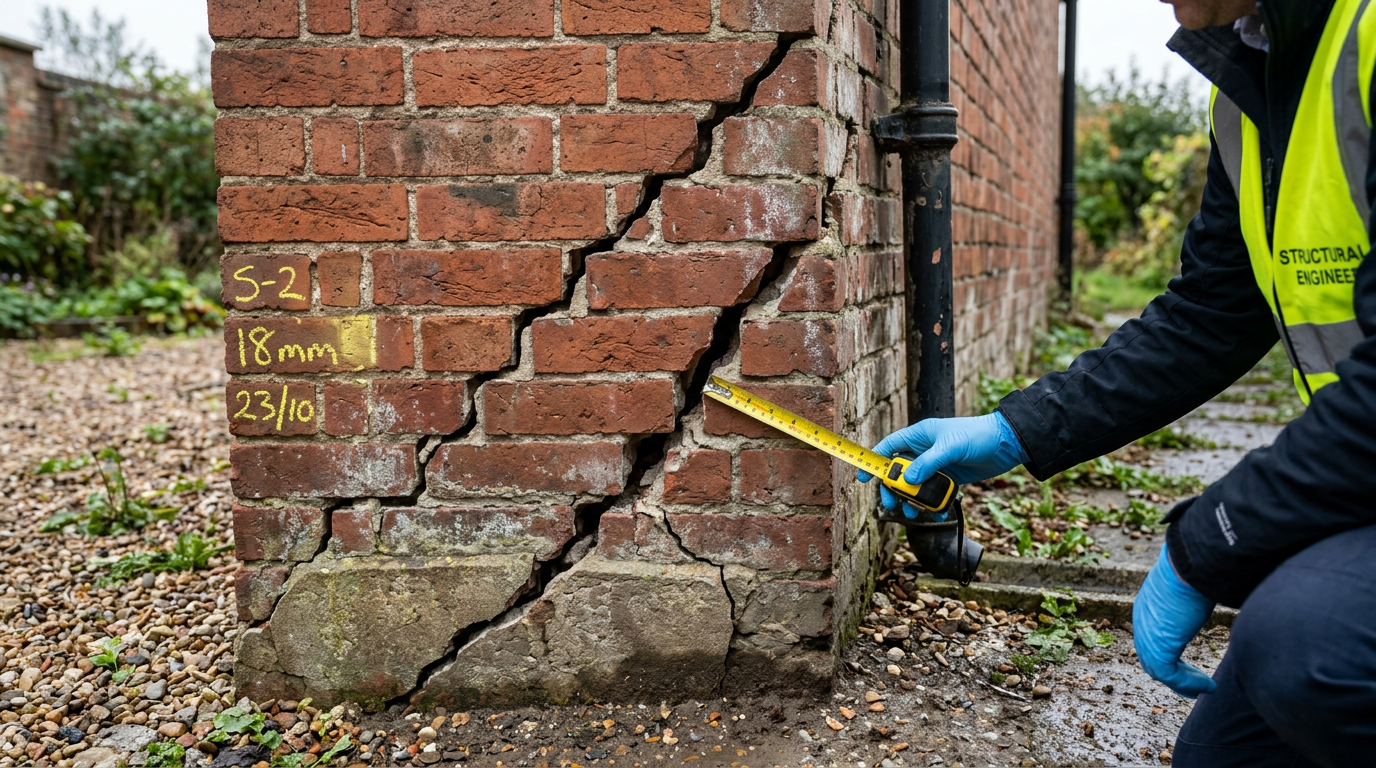
- You've seen cracks, damp or other visible signs of problems during viewings
- The property has had significant alterations or extensions
- It's a larger property (4+ bedrooms)
- You simply want the most thorough protection available
In the Crawley area, much of the post-war housing stock (1945–1975) uses construction methods that benefit from Level 3 scrutiny — particularly Airey houses in some Crawley neighbourhoods, which have specific defects related to their prefabricated concrete construction.
When Is a Level 2 Survey Enough?
A homebuyer report is typically the right choice when:
- The property is a conventional post-war (1945–1990) semi or detached house in good condition
- It's a newer property (1990–2010) with no obvious concerns
- You're buying a leasehold flat in a modern apartment block
- You've viewed the property and it appears well-maintained with no visible defects
What About a Condition Report (Level 1)?
A Level 1 survey is essentially a basic health check — useful only for very new properties or those where you simply want a professional overview before making an offer. It offers minimal detail and limited protection, and we rarely recommend it unless the property was built within the last five to ten years and is in excellent condition.
Can My Mortgage Valuation Replace a Survey?
No — and this is a critical point. Your lender's mortgage valuation is not a survey. It's a brief assessment carried out on behalf of the lender to confirm the property is adequate security for the loan. It does not protect you as a buyer, doesn't investigate defects and carries no liability for the surveyor towards you.
Many buyers in Crawley have made the mistake of assuming their mortgage valuation is sufficient. It is not. It is entirely possible for a mortgage lender to approve a loan on a property with significant structural issues — because their interest is in the value relative to the loan, not the condition relative to your wellbeing.
How Do I Choose?
When we're not sure which level to recommend, we ask our clients four questions:
- How old is the property? (Pre-1930 → Level 3; post-1990 → Level 2 usually fine)
- Is the construction standard? (Yes → Level 2 may work; No → Level 3)
- Do you plan to renovate? (Yes → Level 3; No → consider Level 2)
- Did you notice anything concerning at the viewing? (Yes → Level 3; No → Level 2 may suffice)
If in doubt, we always recommend the more comprehensive option. The difference in cost is modest; the difference in protection is significant.