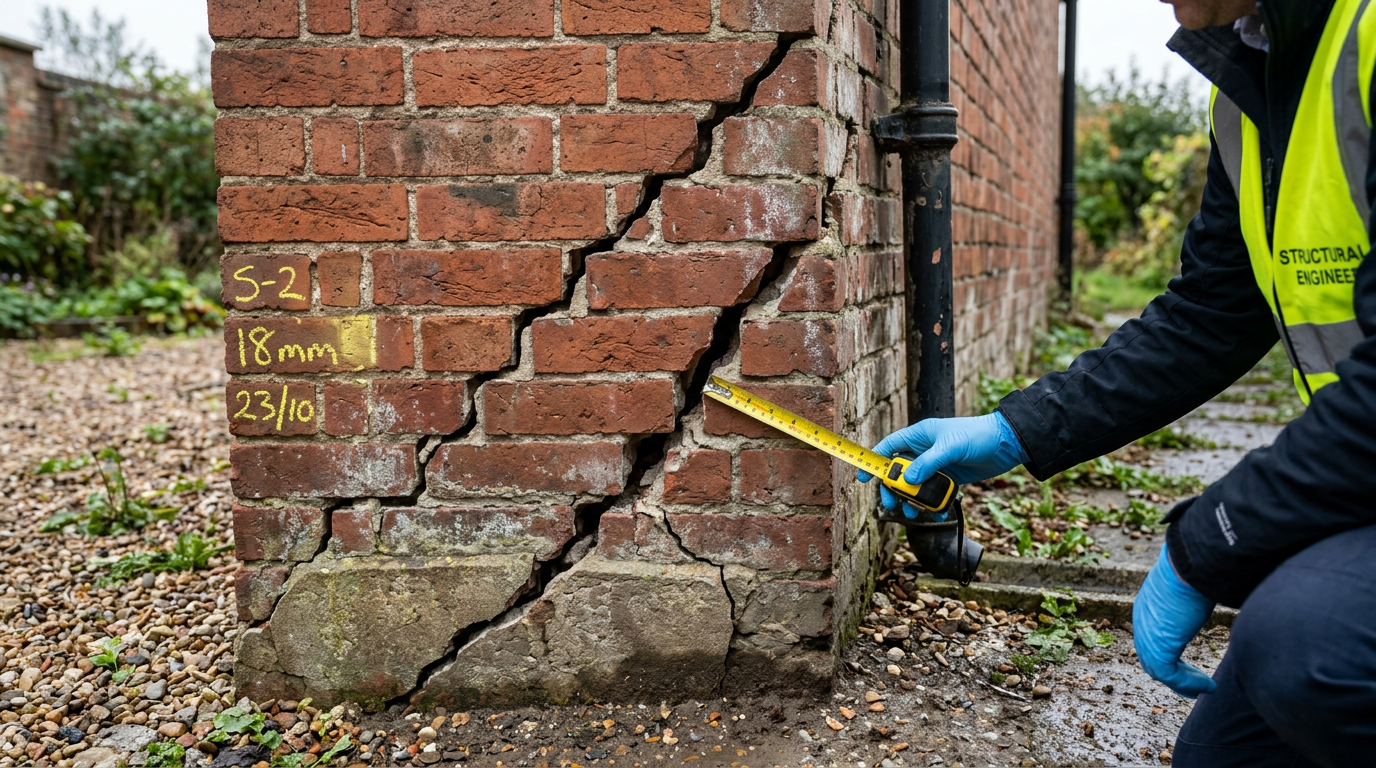
Damp is the single most common defect we find in our building surveys across Crawley and West Sussex. It appears in some form in the majority of older properties we inspect — but that doesn't mean it's always a disaster. The key is knowing what type of damp you're dealing with, how serious it is and what it will cost to fix.
As a chartered building surveyor who has seen hundreds of properties across the Crawley area, I want to share the honest truth about damp — without the alarmism that unfortunately some damp contractors use to oversell unnecessary remedial works.
The Three Types of Damp in Older Properties
1. Rising Damp
Rising damp occurs when moisture from the ground travels upwards through walls by capillary action. It is most common in properties built before around 1920, when damp-proof courses (DPCs) were not mandatory, or in properties where the original DPC has failed or been bridged.
Signs of rising damp:
- A tide mark or staining on walls, typically no higher than about 1 metre from the floor
- Peeling or blistering plaster and wallpaper in the lower sections of walls
- Salt deposits (efflorescence) on wall surfaces
- A damp, musty smell at ground floor level
- High moisture meter readings at the base of walls
Cost to treat: Typically £1,500–£4,500 depending on the length of wall affected and the method used. Chemical DPC injection is the most common treatment, followed by replastering.
2. Penetrating Damp
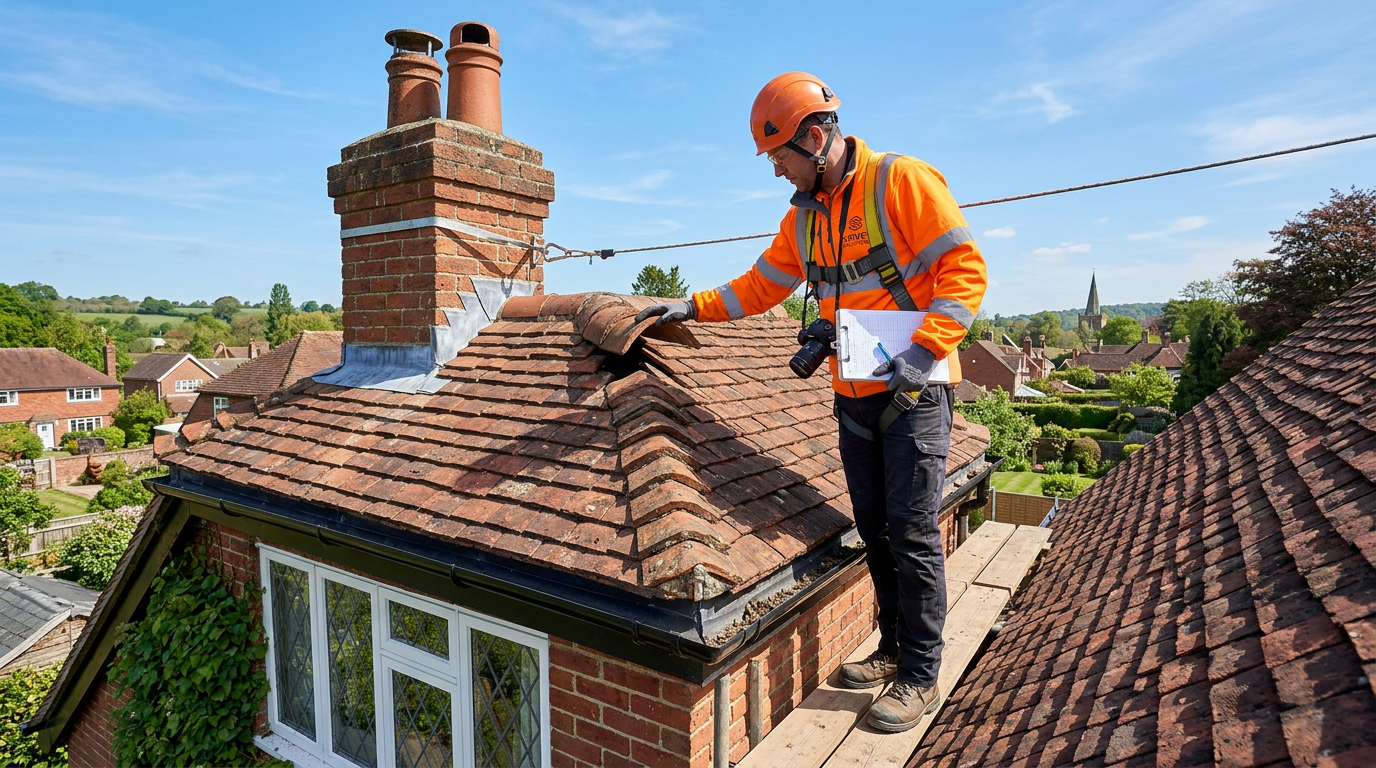
Penetrating damp is caused by water entering the building from outside — through defective roof coverings, failed pointing, cracked render, damaged flashing or poorly-sealed windows. Unlike rising damp, it can affect any level of the building, not just the ground floor.
Signs of penetrating damp:
- Isolated patches of damp or staining — not limited to the base of walls
- Patches that appear or worsen after rain
- Damp at ceiling level (indicating roof or parapet wall issues)
- Damp around windows or at reveals (indicating failed window seals or flashing)
- Spalled (flaking) brickwork on the external face
Cost to treat: Hugely variable depending on the source. Repointing a chimney: £400–£800. Re-flashing a chimney: £600–£1,200. Replacing roof coverings: £5,000–£25,000+. The key is identifying the source accurately.
3. Condensation Damp
Condensation is the most common form of damp in UK properties — and the most frequently misdiagnosed. It occurs when warm, moist air contacts a cold surface and the moisture condenses. It's most common in poorly ventilated bathrooms, kitchens and bedrooms.
Signs of condensation:
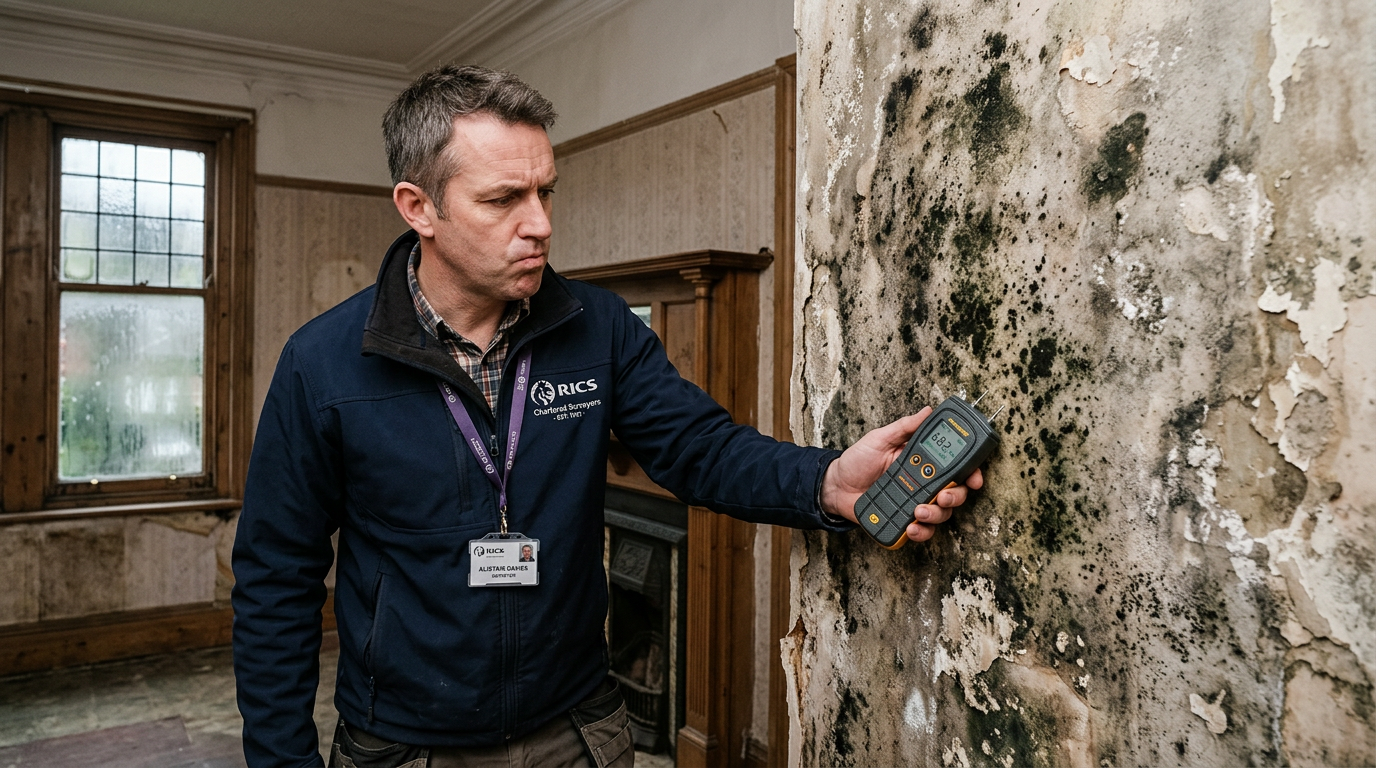
- Black mould growth — typically on corners, around windows and in poorly ventilated spaces
- Misted or streaming windows
- Damp feeling to walls in cold periods
- Mould on clothes or furniture near external walls
Cost to treat: Often low cost. Improving ventilation (extractor fans, trickle vents, MVHR systems), improving heating and reducing moisture sources can resolve most condensation issues for a few hundred pounds. In severe cases, specialist treatment may be needed.
How Our Surveyors Assess Damp
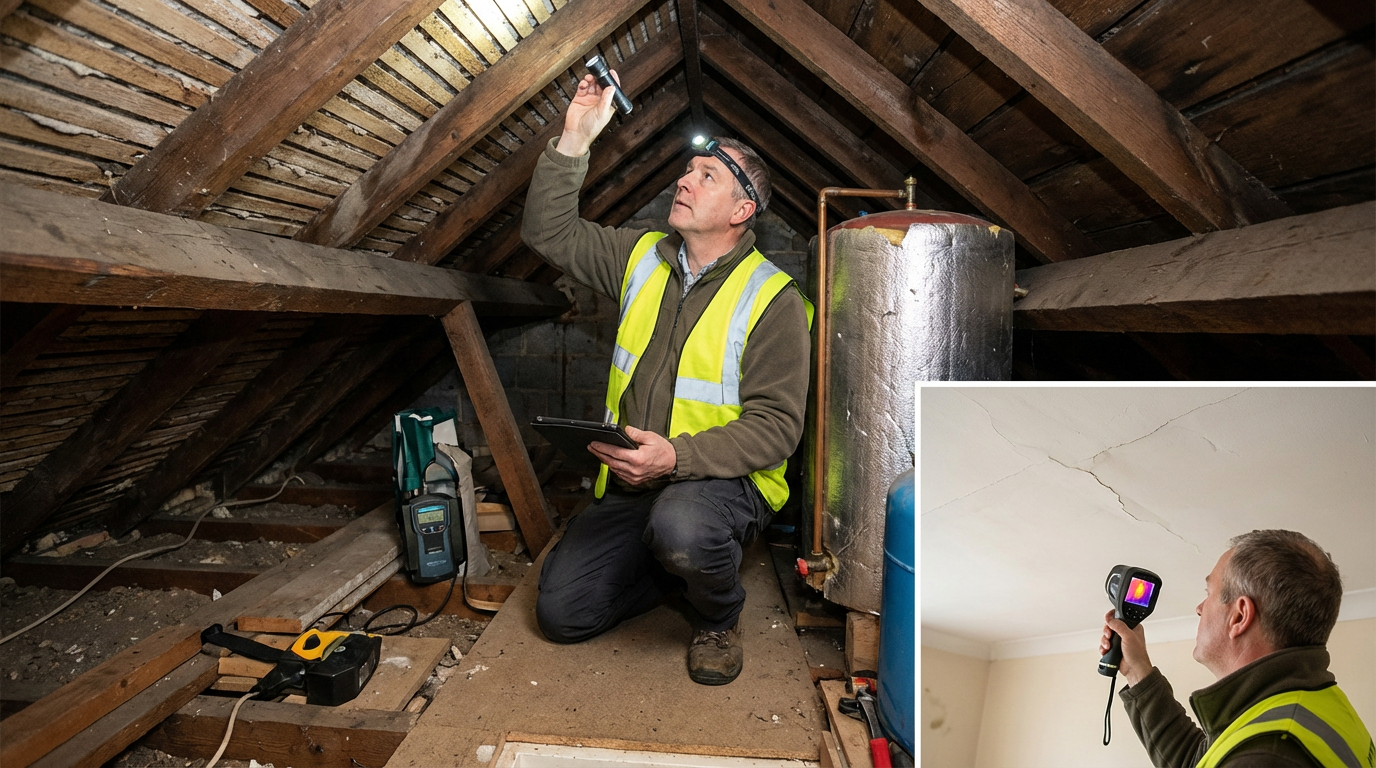
During a building survey, we use a combination of:
- Calibrated moisture meters — to measure moisture content at different heights and positions on walls
- Visual inspection — identifying staining patterns, salt deposits, mould and evidence of previous treatment
- Probe testing (for Level 3 surveys) — inserting a probe through the plaster to test actual wall moisture levels
- Hygrothermal assessment — considering the building's ventilation, heating and occupancy patterns
It's worth noting that many damp readings in older properties are caused by condensation, not structural defects. We always consider the full context before recommending expensive remedial works.
Industry note: There is a well-documented issue in the UK with damp-proofing companies misdiagnosing condensation as rising damp and recommending unnecessary chemical injection treatments. An independent survey from a qualified RICS surveyor gives you an unbiased assessment — we have no financial interest in recommending unnecessary treatments.
Damp and Older Properties in the Crawley Area
The Crawley area has a significant stock of Victorian, Edwardian and interwar properties — particularly in Three Bridges, Worth and parts of Horsham, Horley and Redhill. These properties were built with solid walls and no DPC, or with early bitumen-felt DPCs that can fail. They also often have original lime-based plaster — which handles moisture very differently from modern cement-based plaster.
If you're buying an older property in Crawley, it's extremely likely our survey will identify some form of moisture-related issue. In the vast majority of cases, this is manageable and should not deter you from buying.