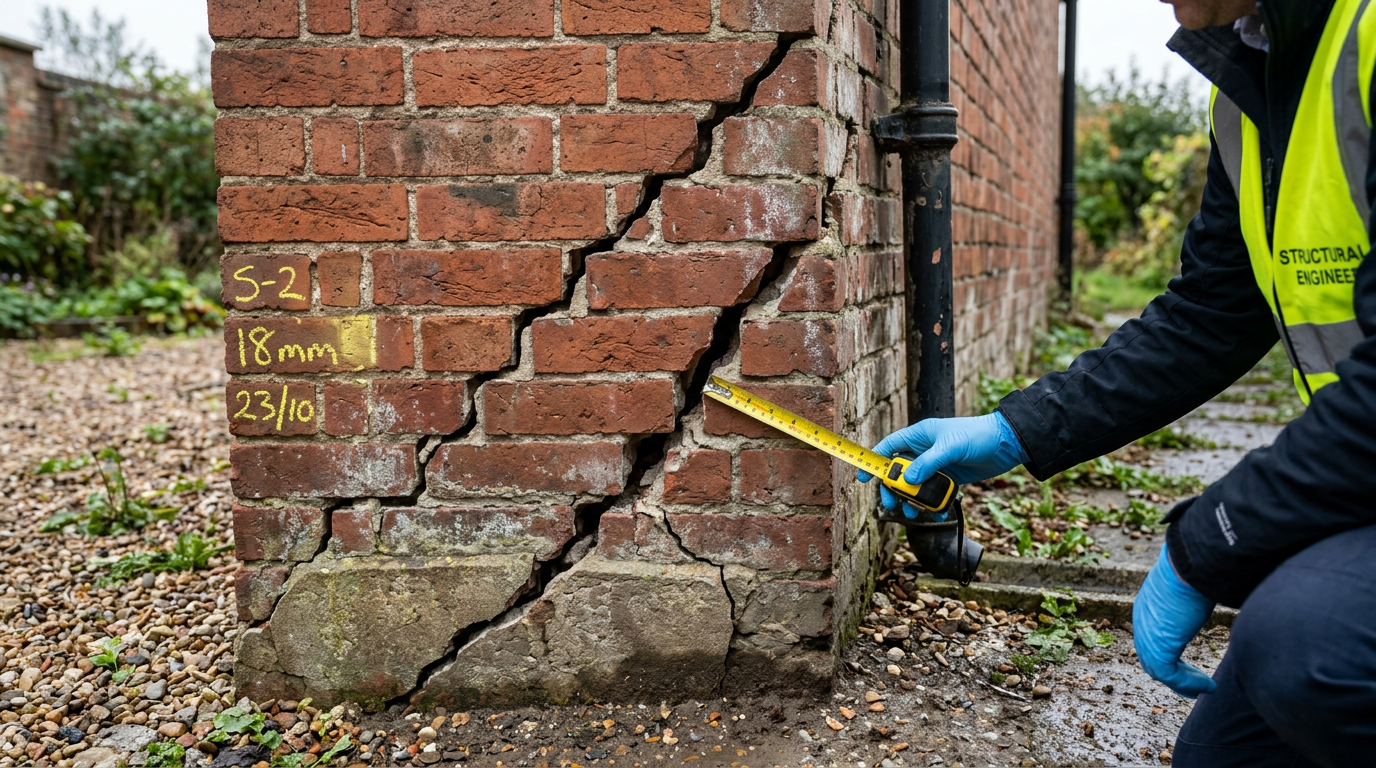
The Party Wall Act 1996 is one of the most misunderstood pieces of property legislation in the UK. As party wall surveyors in Crawley, we're regularly called in to help homeowners who've already started work without serving notice — and the fallout can be costly. This guide explains everything you need to know before you start your project.
What Is the Party Wall Act?
The Party Wall etc. Act 1996 is a piece of legislation that applies to England and Wales. It provides a framework for preventing and resolving disputes in relation to works on or near party walls, party floors, party ceilings and boundary structures.
A "party wall" is simply a wall that stands on the land of two or more owners. This includes:
- The wall between two semi-detached houses
- The wall between two terraced houses
- Floors and ceilings between flats in a converted building
- Garden boundary walls built on the boundary line
When Does the Act Apply?
The Act applies to three categories of work:
- Works to existing party walls — including cutting into a party wall to install steel beams, raising or reducing the height of a party wall, demolishing and rebuilding
- New structures on or at the boundary — including new walls built along the boundary line
- Excavation near adjacent buildings — any excavation within 3 metres of an adjoining building if digging below the bottom of their foundations, or within 6 metres if the excavation would cut a line drawn at 45° from the bottom of their foundations
Common projects that trigger the Act in Crawley include:
- Loft conversions on semi-detached or terraced houses
- Single or double-storey rear or side extensions
- Basement conversions and digs
- Removing chimney breasts
- Inserting steel beams into party walls
- Rebuilding or raising boundary walls
What Is a Party Wall Notice?
Before carrying out any notifiable work, you must serve a written Party Wall Notice on all affected adjoining owners. This must be done at least:
- 2 months before works begin (for party wall works)
- 1 month before works begin (for new boundary structures)
- 1 month before excavation works begin
The notice must include specific information — the building owner's details, the address of the property, a description of the proposed works, the intended start date and a statement that the Act applies.
Real case from Maidenbower, Crawley: A homeowner started building a rear extension without serving party wall notice on the neighbour. The neighbour obtained an injunction, halting the build for 6 weeks while a party wall award was prepared. The delay cost approximately £4,000 in contractor standing time and extended stay costs. Serving the notice from day one would have cost a fraction of that.
What Happens After the Notice Is Served?
The adjoining owner has 14 days to respond. They can:
- Consent — agree in writing, meaning no surveyor is needed
- Dissent and agree to a single surveyor — both parties share one agreed surveyor
- Dissent and appoint their own surveyor — both parties appoint their own party wall surveyors, who then appoint a third surveyor
If no response is received within 14 days, the adjoining owner is deemed to have dissented and the dispute resolution procedure begins.
What Is a Party Wall Award?
A Party Wall Award (also called a "party wall agreement") is a legal document prepared by the appointed surveyor(s). It sets out:
- The works to be carried out and how they should be done
- A Schedule of Condition of the adjoining property before works begin
- Working hours and other practical requirements
- How any damage caused by the works will be assessed and remedied
- Who pays the costs (usually the building owner)
The award is a binding legal document. It protects both parties.
Boundary Disputes and the Act
The Party Wall Act also provides a framework for resolving boundary disputes relating to structures on the boundary. However, it's important to note that the Act does not determine where the boundary lies — it governs works to structures on or near it. Boundary position disputes require separate legal action.