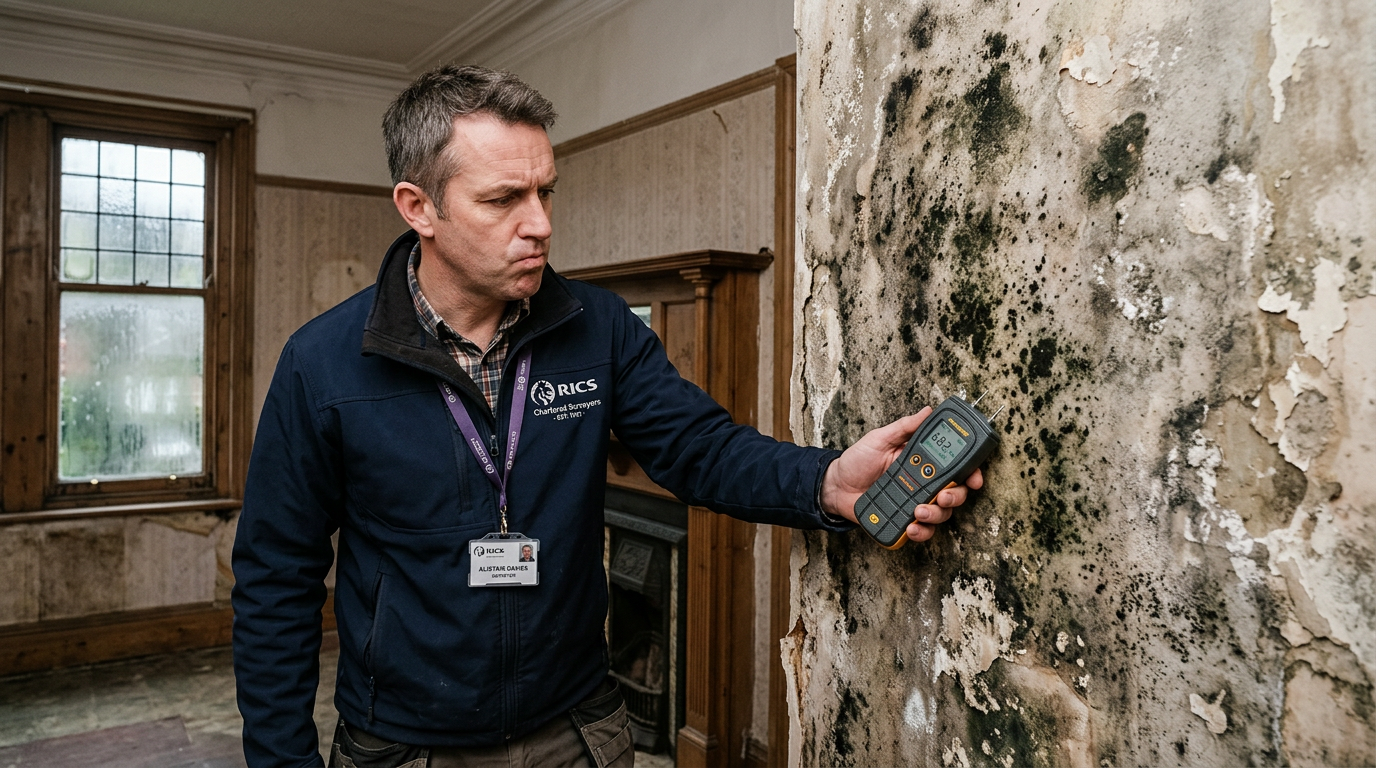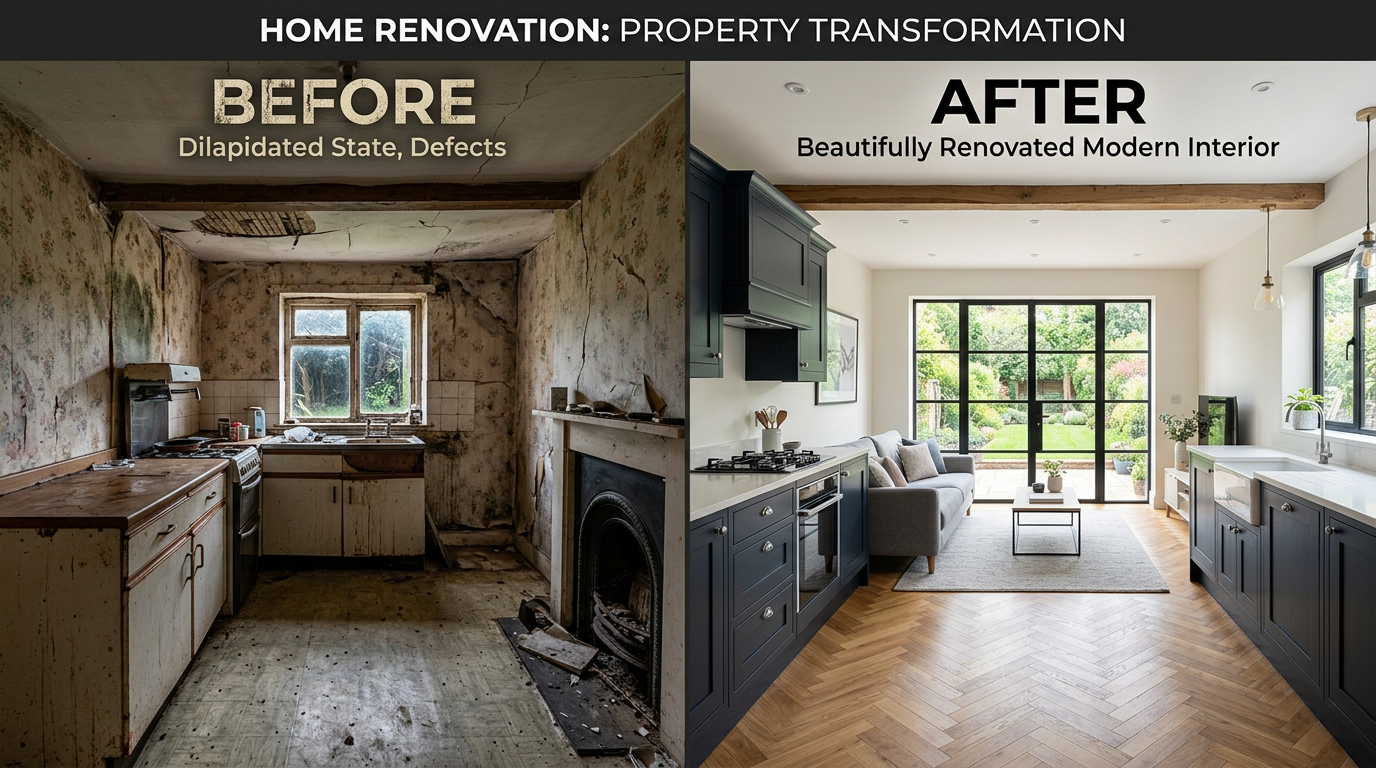
In my years as a chartered building surveyor in Crawley, I've found defects in more roofs than I can count. The roof is arguably the most critical element of any building — it protects everything beneath it. And yet it's often one of the last things property buyers think to check.
Here's what we look for when we inspect a roof as part of a building survey in West Sussex, and why getting it right can save you thousands.
What Parts of the Roof Do We Inspect?
A thorough roof survey during a Level 3 building survey covers:
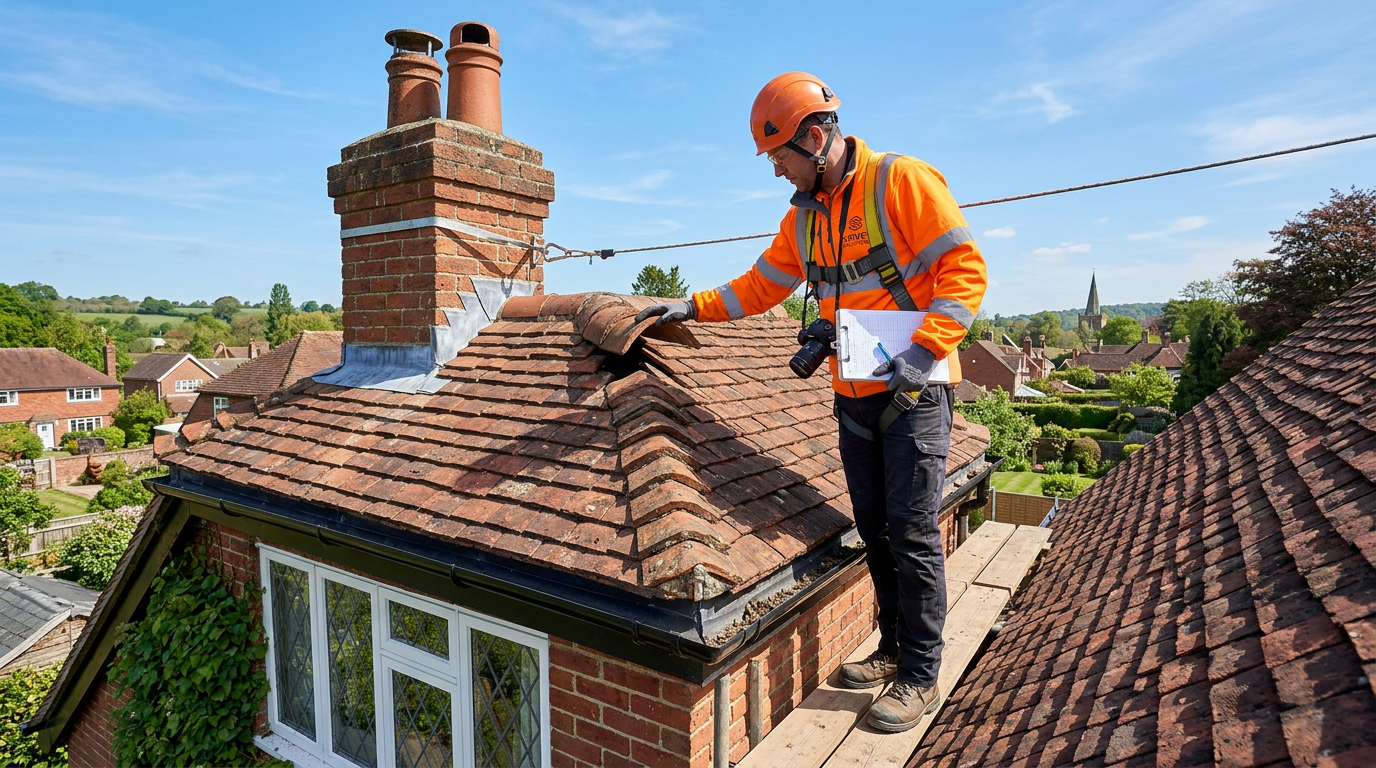
- Roof coverings — the tiles, slates, flat roof coverings, corrugated sheets or other material that sheds the rain
- Flashings and abutments — the lead or mortar details where the roof meets a chimney, wall or dormer
- Gutters and downpipes — condition and whether they're functioning correctly
- Chimneys — structural stability, pointing condition, flaunching and chimney pots
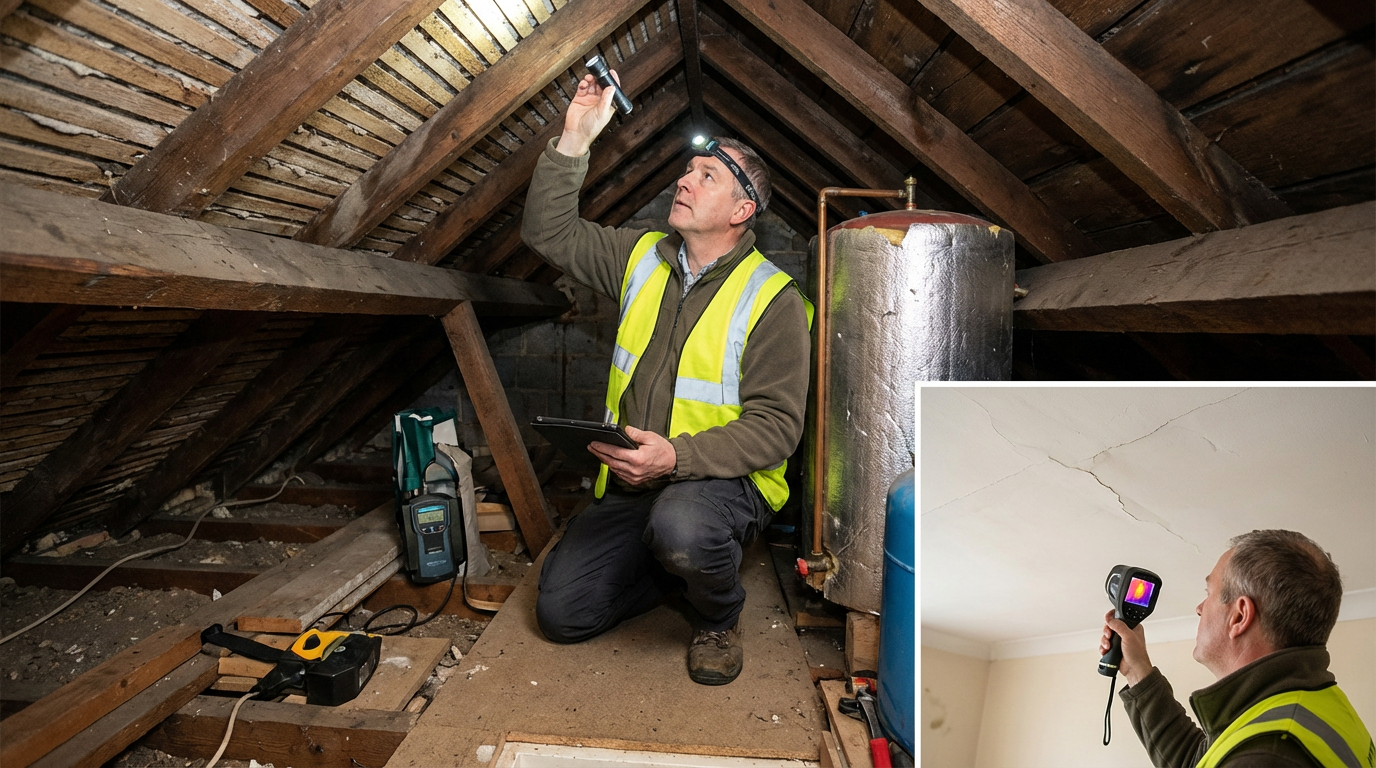
- Roof timbers — the structural frame of the roof, inspected from inside the loft space
- Roof ventilation — whether there's adequate airflow in the loft to prevent condensation
- Insulation — level and position of insulation in the loft
- Dormer windows and skylights — condition and weatherproofing
- Flat roofs (where present) — covering condition, ponding risk, drainage
The Most Common Roof Defects We Find in Crawley
Based on hundreds of surveys in Crawley and across West Sussex, here are the roof defects we encounter most frequently:
1. Slipped, Missing or Broken Tiles/Slates
The most common defect on older properties. Individual slipped or broken tiles can allow water ingress that causes significant damage to timbers and ceilings over time. On Victorian and Edwardian properties, nail sickness — where the original iron nails securing slates have corroded — means the entire roof covering may be at or near the end of its life. This is a significant cost item (£5,000–£20,000+ for a full re-roof) and one we always flag clearly.
2. Failed Lead Flashings
Lead flashings seal the joint between the roof covering and vertical elements like chimneys and walls. They fail through thermal movement, pointing failure or theft (sadly common in some areas). Failed flashings are one of the most frequent causes of penetrating damp in the properties we survey.
3. Defective or Blocked Gutters
Overflowing gutters saturate the wall behind, leading to damp internally. Plastic guttering from the 1990s and 2000s is now reaching the end of its life on many Crawley properties, and cast iron guttering on older properties is often cracked or detached at joints.
4. Chimney Problems
Crawley's older properties have many chimneys, and we find problems with almost all of them. Loose or cracked flaunching (the cement cap at the top of the chimney), failed pointing in the stack, loose chimney pots and structural lean are all common. Chimney repairs range from a few hundred pounds for minor repointing to £2,000–£5,000 for a full chimney rebuild.
5. Roof Timber Issues
In the loft space, we check every accessible timber. Common issues include: woodworm infestation (particularly in older softwood timbers), rot in timbers exposed to water ingress, undersized or overstressed rafters (often the result of additional loading from new roof coverings), and evidence of poorly executed DIY repairs to the roof structure.
6. Flat Roof Deterioration
Many Crawley properties have flat-roofed extensions (particularly from the 1960s–1980s). Felt flat roofs have a limited lifespan — typically 10–15 years — and we frequently find these at or beyond end of life, with cracking, bubbling and pooling water. A modern GRP (fibreglass) replacement typically costs £1,500–£3,500 depending on size.
What Happens If We Find Serious Roof Problems?
A Condition 3 roof finding in your survey report doesn't necessarily mean you should walk away from the purchase — but it does mean you need to act. Options include:
- Obtain a specialist roofing contractor's quote and renegotiate the purchase price
- Ask the vendor to carry out repairs before exchange
- Obtain a retention from the mortgage lender until works are completed post-completion
- Factor the cost into your financial planning and budget for remedial works promptly after completion